

When Profanity Stopped Being Disqualifying
How presidential cursing documents the collapse of deliberative power

April 30, 1974. The White House releases transcripts of Nixon’s secret recordings. Over a thousand pages. Every curse replaced with the same phrase: “[EXPLETIVE DELETED].”
The brackets appear 1,800 times.
Americans read conversations between the president and his advisors where half the dialogue is missing, replaced by clinical notation. What shocks them isn’t the criminality—they’d suspected that. It’s the gap between Nixon’s public rectitude and the language of a man who couldn’t make it through three sentences without swearing.
The profanity damages him more than the obstruction of justice. His polling drops further after the transcripts than after the Saturday Night Massacre. The language proves he isn’t who he claimed to be.
That mattered in 1974. It was the last time it would.
The private years
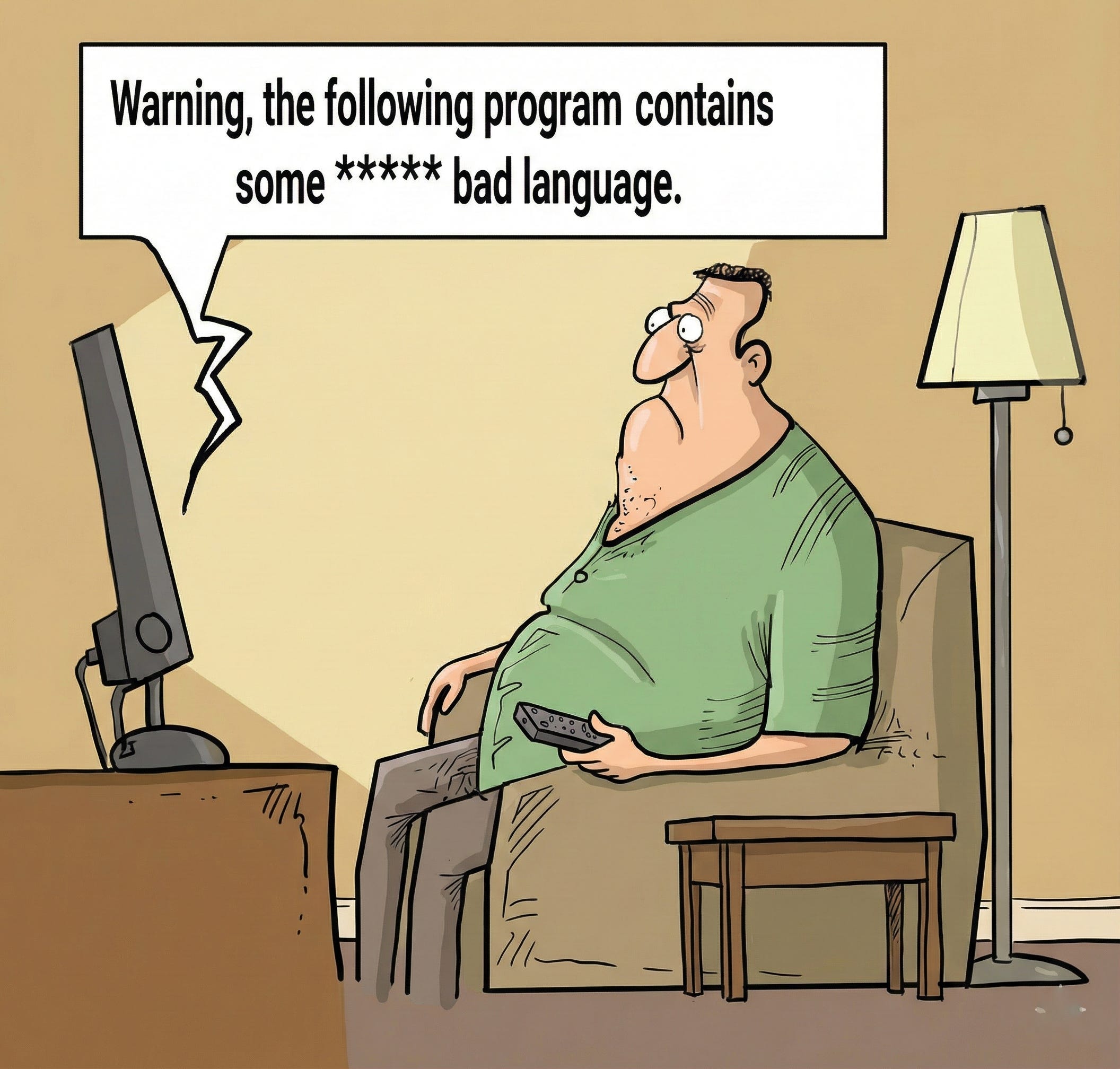
For four decades, politicians swear constantly. Just not on microphones.
LBJ holds cabinet meetings on the toilet, door open, cursing his way through policy discussions. JFK swears “like a sailor”—which he was. Everyone knows. Nobody reports it.
The performance holds. Public speech stays clean because public speech still governs outcomes.
June 24, 2004. The Senate floor. Vice President Dick Cheney tells Senator Patrick Leahy: “Go fuck yourself.”
Major scandal. Cheney never apologizes. Later calls it one of his proudest moments. But the point is—it wasn’t meant for the C-SPAN cameras. The microphones caught something that was supposed to stay private.
March 23, 2010. Biden leans toward Obama at the ACA signing ceremony. Live microphones pick up his whisper: “This is a big fucking deal.”
Sensation. Headlines for days. The Washington Post debates whether to print the word. Biden apologizes.
The line between public and private speech still holds. Barely.
The break
November 7, 2015. Fort Dodge, Iowa. Trump addresses a crowd about ISIS.
“I would bomb the shit out of them.”
Cheers. Standing ovation.
He does it again. And again. By early 2016, he’s using “fuck” at campaign rallies. Telling crowds that businesses moving to Mexico can “go fuck themselves.”
No apologies. No consequences. The crowds grow larger.
Something fundamental breaks. Not because Trump introduces profanity to politics—politicians have always sworn. Because he demonstrates that public profanity no longer costs anything.
The numbers document the shift. In 2015, federal and state lawmakers tweet 132 profanities. By 2019: 2,578.
It’s not one man. It’s a threshold crossed.
What broke
Not civility. Infrastructure.
Nixon swore when the presidency still meant legislative persuasion. When a president’s words shaped what Congress would pass, what courts would uphold, what bureaucracies would enforce.
Trump swore after that gap collapsed—after power migrated from legislatures to platforms, from persuasion to distribution.
Here’s what that looks like concretely:
In 2012, Obama’s campaign speeches still aimed to convince swing voters in battleground states. His staff measured persuasion—how many undecideds moved after hearing him speak.
By 2016, Trump’s campaign abandoned persuasion entirely. His digital operation, run through Cambridge Analytica and Facebook’s custom audiences, micro-targeted voters who already agreed with him. The rallies weren’t for convincing anyone. They were for generating viral clips that platforms would distribute to pre-sorted audiences.
The algorithm replaced the argument.
You don’t need to persuade anyone when the infrastructure already delivers your message only to people predisposed to accept it.
Speech became performance because outcomes no longer depended on convincing anyone of anything. Only on signaling which tribe you belonged to.
The mechanism
Late Republican Rome. Senators prized rhetorical restraint. Speech was governance. The ability to persuade determined which laws passed, which wars began, which officials rose.
As power centralized—first under Pompey, then Caesar, then the emperors—speech stopped mattering to outcomes. The Senate still met. Senators still spoke. But decisions happened elsewhere.
Language coarsened. Not because Romans became less civilized. Because persuasion gave way to command. When you don’t need to convince anyone to change anything, verbal precision becomes wasted effort.
Decorum persists only where it’s functionally necessary.
Why it feels honest
“Politicians have always sworn,” explains Benjamin Bergen, cognitive scientist. “The big change is in the past 10 years or so, it’s been much more public.”
Voters call it authentic. Finally, a politician who sounds like real people talk.
But that’s not what’s happening.
Profanity feels authentic now because it acknowledges what everyone already knows: political speech doesn’t change outcomes. Only alignment does.
Blunt language works because it collapses the distance between speaker and audience without requiring actual power transfer. It says: I see the same broken system you do.
Recognition without agency. Performance without governance.
The seismograph
Both parties do it now. War Secretary Pete Hegseth at Quantico: “We’re done with that shit.” Kamala Harris in September: “These motherfuckers are crazy.” JD Vance calling a podcast host a “dipshit.”
The needle keeps jumping because the ground keeps shifting.
Profanity isn’t the earthquake. It’s what seismographs record when power moves.
What brackets would mean now
Imagine releasing Nixon’s transcripts today. Same recordings. Same profanity. Same 1,800 instances of presidential cursing.
Would anyone care?
The brackets would look quaint. Unnecessary. Like censoring something everyone already assumes is there.
That’s not because we’re more tolerant. It’s because presidential speech no longer carries the institutional weight that made Nixon’s language shocking. When words don’t govern outcomes, the gap between public performance and private speech stops mattering.
The brackets documented a time when that gap still had consequences. When what a president said privately could destroy what he claimed publicly. When language still shaped what power could do.
Now power operates regardless of language. The platforms determining contemporary outcomes don’t require decorum because they don’t require persuasion. Just distribution to pre-sorted audiences.
The brackets are gone because the system that made them necessary collapsed.
Systems persist until they don’t.
A note on what this isn't:
This isn't about whether profanity is good or bad. It's not about Trump specifically. It's not arguing for or against civility.
It's about what language documents when institutional arrangements change.
Nixon's brackets mattered because his speech still governed outcomes. When that stopped being true, the brackets stopped mattering.
The profanity is the measurement. Not the thing being measured.
If you find yourself wanting to argue about whether politicians should swear, you're having a different conversation than the one this piece is having.
The mechanism operates regardless of whether you approve of it.