


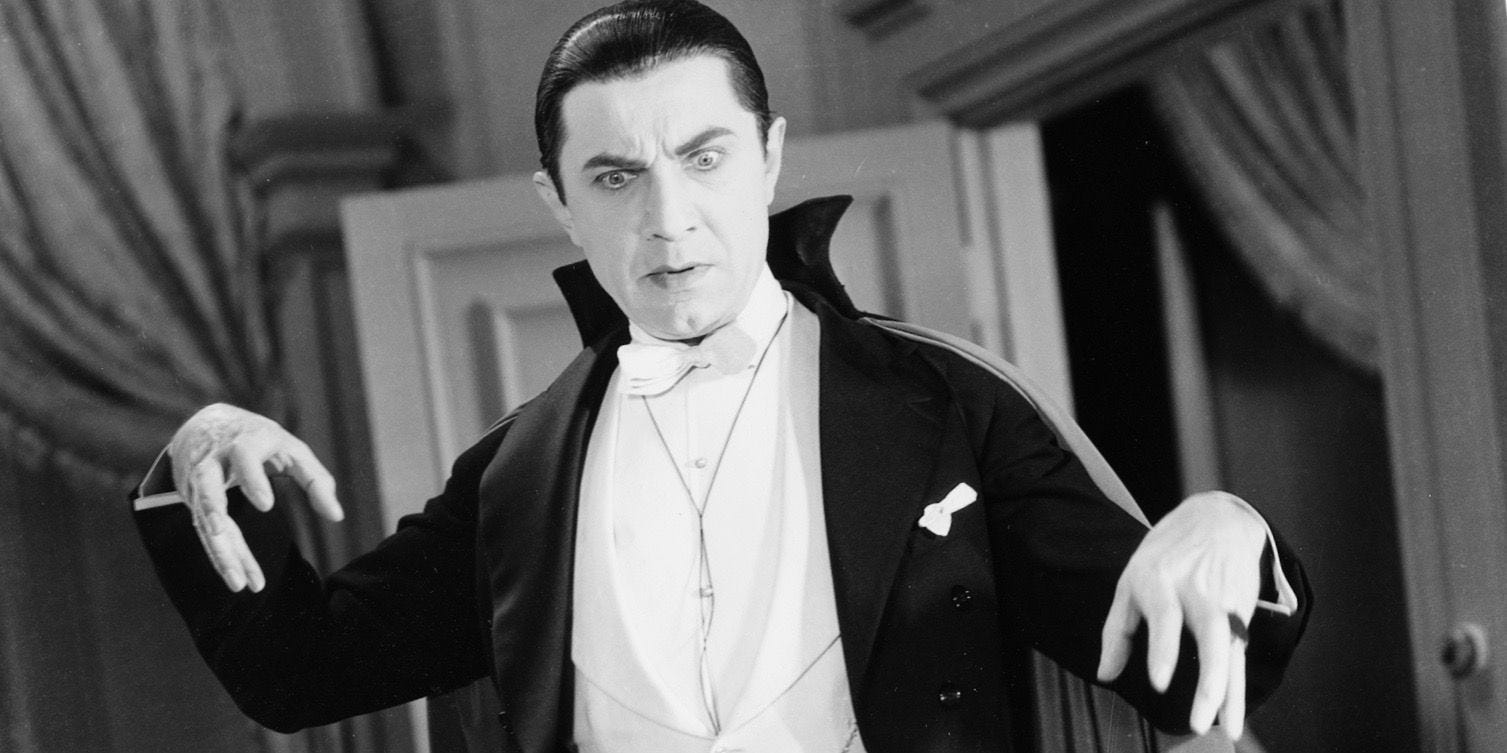
Transylvania. 1931.
A castle on a cliff. Stone walls. Rats in the corridors. Renfield arrives by carriage. He’s been traveling for days. The local villagers warned him not to go.
He goes anyway. Business is business.
Inside, the count moves like a predator. His eyes reflect light in the darkness. The camera doesn’t hide what he is.
Renfield sees it.
Too late.
Cut to: Six weeks later.
The opera house is full.
London, 1931. The Royal Albert Hall. Gas lamps have given way to electric, but the boxes are draped in burgundy velvet. Women wear evening gowns with trains. Men in white tie and tails. The music swells — Wagner. Something Germanic and respectable.
The camera pans across faces.
Everyone here has a title or married one. Everyone here was introduced by someone who was already inside. The doors don’t open to strangers.
Then Count Dracula enters.
He moves through the lobby during intermission. Black cape lined in red silk. White tie. Gloves. Hair slicked back in the Continental style. His face is pale but so are half the English aristocrats in the room. He speaks — Hungarian accent, Romanian. Old nobility from somewhere that had kings before England did.
A woman is introduced.
He kisses her hand.
She doesn’t pull away.
No one stops him. No one asks who sent the invitation. No one verifies the title.
He looks like he belongs.
That’s enough.
Six weeks ago he was alone in a castle with rats and coffins. Now he’s at the opera.
Dracula doesn’t represent evil. He represents elite immunity architecture.
That framing wasn’t accidental. Universal Studios released Dracula on February 14, 1931 — Valentine’s Day — packaging aristocratic menace as prestige entertainment. The monster was not marketed as chaos from below, but as refinement from above. Evening wear. Opera houses. European lineage. Horror entered American culture dressed for the theater. Menace travels farther when it looks respectable.
A story about predation disguised as courtship, released on a holiday devoted to both.
The predator traveled. London received him.
Watch what follows. Not the bats and fog — the seating chart.
I. The Pattern Match
First dinner party.
The Seward house. Dr. Seward has a practice in London and a daughter named Mina. The table is set with crystal. Candles in silver holders. The count arrives exactly on time — late enough to be fashionable, early enough to be respectful.
He declines food.
“I never drink... wine.”
The line reads as European eccentricity. Fasting for health. Old world custom.
No one presses.
The rest of the signals align:
How he holds the cigarette case
How he stands when women enter
The estates in the Carpathians
The ancestral titles
Dr. Seward doesn’t ask: “Why is this man at my table?”
He asks: “How do you take your tea?”
Elites don’t protect monsters. They protect those who look like themselves.
The protection isn’t ideological. It’s perceptual.
Dracula passes because the signals align. Questioning him means questioning how the room knows who belongs.
Challenge the guest, challenge the system.
II. The Invitation Mechanism
Earlier. Carfax Abbey.
Renfield is a solicitor. English. Respectable firm. He travels to Transylvania on business — the count is purchasing property in London.
When Renfield returns, he’s changed. But his credentials haven’t.
The firm’s letterhead. The professional title. The existing relationships.
When he introduces Count Dracula, that introduction carries weight.
Not because Renfield is trusted now. Because he was trusted before.
Elite systems run on validated intermediaries. Letters of recommendation. Shared networks. Credential transfer across borders.
Access is granted, not forced.
And once granted, revoking it becomes expensive. Revocation admits the network failed. The introduction was wrong. The trusted intermediary damaged reputation by vouching.
Embarrassment cascades.
So the invitation stands.
One validated entry point immunizes against hundreds of future questions.
III. Prestige as Immune Suppressant
Back to the theater.
Different night. Weeks later. The count is in a box seat. Dr. Seward is there. His daughter. Her fiancé John Harker.
Van Helsing arrives.
He’s a professor. Dutch. Studies blood diseases. He doesn’t know the count but he looks at him the way doctors look at symptoms.
He sees it immediately.
After the performance, he pulls Seward aside. Quiet hallway. Marble floors.
“That man. Who is he?”
“Count Dracula. From the Carpathians. Charming fellow. A bit odd but—”
“Where did you meet him?”
“Renfield introduced us. Why?”
“I need to examine your daughter.”
Van Helsing is outside the social system. He’s a clinician. His reputation doesn’t depend on the room.
The others resist. For weeks.
Mina grows pale. Lucy (her friend) grows weaker. The count continues attending social functions.
No one acts.
Because to accuse Dracula is to admit:
The room misjudged
The screening failed
The circle vouched for the wrong man
Better to wait. To gather more evidence. To be certain. To give him the benefit of the doubt.
He has a title, after all.
Expelling one of its own requires questioning itself — and that threatens the legitimacy it runs on.
Any institution that relies on recognition patterns can be exploited by someone who learns the pattern.
Delay becomes default.
IV. Narrative Control
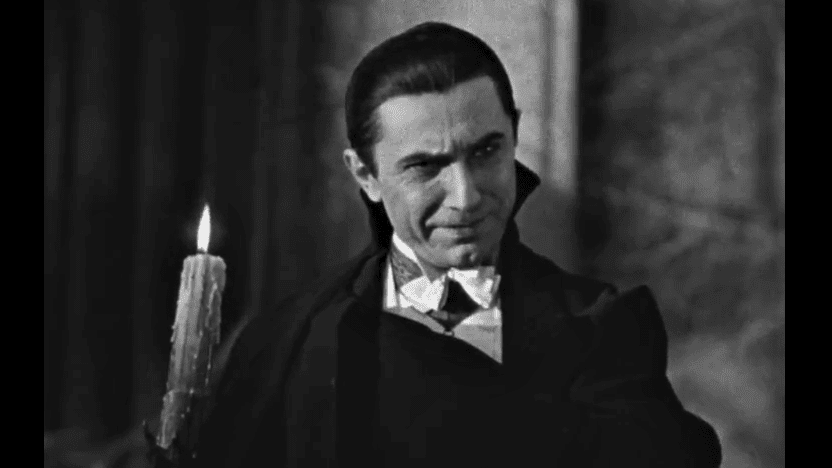
Bela Lugosi does not play Dracula as animal or brute. He plays him as composed. Civil. Courteous. The accent signals old Europe. The posture signals breeding. The stillness signals control. Nothing in his performance reads as frantic or unstable. The menace arrives wrapped in etiquette. The danger is credentialed before it is revealed.
Close-up.
Bela Lugosi’s face fills the frame. The eyes don’t blink. The camera holds. Five seconds. Ten. The actress looks back. Her expression goes slack.
“You will come to me.”
The film frames this as hypnosis. Supernatural power.
Strip that away.
He controls:
Tone of voice
Tempo of speech
Eye contact duration
Physical proximity
Interpretation of what’s happening
Definition of what’s acceptable
She doesn’t scream. She doesn’t call for help. She doesn’t run.
Because he’s defined the situation as intimate conversation, not assault. As invitation, not coercion. As her choice, not his imposition.
When someone holds the narrative frame, they dictate how long before action becomes possible.
In these environments, the one who sets conversational terms controls the clock. Questions get deferred. Concerns get reframed as overreaction. Evidence gets recontextualized as misunderstanding.
The count doesn’t need supernatural powers. He needs uninterrupted time. And the room’s politeness norms give him that.
Interlude.
Renfield is in an asylum now.
Dr. Seward runs it. The count visits — checking on his “friend.”
Renfield sees him coming. Starts screaming.
“Master! Master! I didn’t tell them!”
The orderlies restrain him.
The count speaks to Seward. Calm. Regretful.
“Poor fellow. The fever took his mind.”
Seward nods. “Such a promising solicitor.”
The count is allowed to leave. Renfield is sedated.
Testimony becomes symptom, not evidence.
V. The Real Horror
Lucy’s bedroom.
Morning light through lace curtains. She’s in bed. Pale. Breathing shallow. Two marks on her throat.
Her mother sits beside her. Worried but not panicked. She’s called the family physician.
He examines her. Checks her pulse. Temperature. Coloring.
“She needs rest. Iron supplements. The London air doesn’t agree with everyone.”
He doesn’t see the marks. Or he sees them and doesn’t register what they mean.
The count doesn’t terrorize mobs. He weakens individuals quietly. One at a time. In private.
They see only symptoms:
Faintness
Exhaustion
Decline
Paleness
No visible perpetrator.
Harm happens below the threshold of collective witness. Pattern recognition requires comparison across cases. But privacy norms prevent that.
Lucy’s mother doesn’t know about Mina. Mina doesn’t know about the woman from the theater.
So the count remains. Moving between drawing rooms. Between bedrooms. Between families.
Until Van Helsing forces the pattern into view.
Compression
Carfax Abbey. Dawn.
Van Helsing and Harker find the coffin. The count lies inside. Still. Corpse-like.
Van Helsing raises the stake.
Harker hesitates.
“Are you certain?”
“Look at his mouth.”
Blood on the lips. Fresh.
Van Helsing drives the stake through the heart.
The count doesn’t scream. He simply... ends. The threat collapses. The immunity architecture fails the moment someone acts outside its social constraints.
Van Helsing is the outsider. The academic. No social capital to protect in Seward’s circle.
He can act because he has nothing to lose in the room’s status economy.
Everyone else hesitated.
Seward had access. Proximity. Authority.
But he was inside.
The people best positioned to see the problem are the ones most captured by what enables it.
The ones free to act are usually outside.
Usually late.
The immune system recognized the tuxedo before it recognized the bite.
Why do some threats linger unseen? Not because they’re invisible — but because they match the room. In The Guest List Problem, Dracula reveals how prestige becomes permission — and permission is assumed — how recognition substitutes for screening, and how delay protects the familiar. Look past the fangs — the real architecture is social.