

The Ghost in the Machine
A Tale of Two Rooms

ROOM ONE
Drapes shut. Air stale. The smell of cleaning fluid and something underneath that no amount of cleaning removes.
Assistants wait for instructions no one gives. Phone lines ring into nowhere. Pill bottles lined like soldiers on the nightstand—amber glass, white caps, typed labels promising sleep, wakefulness, calm, focus.
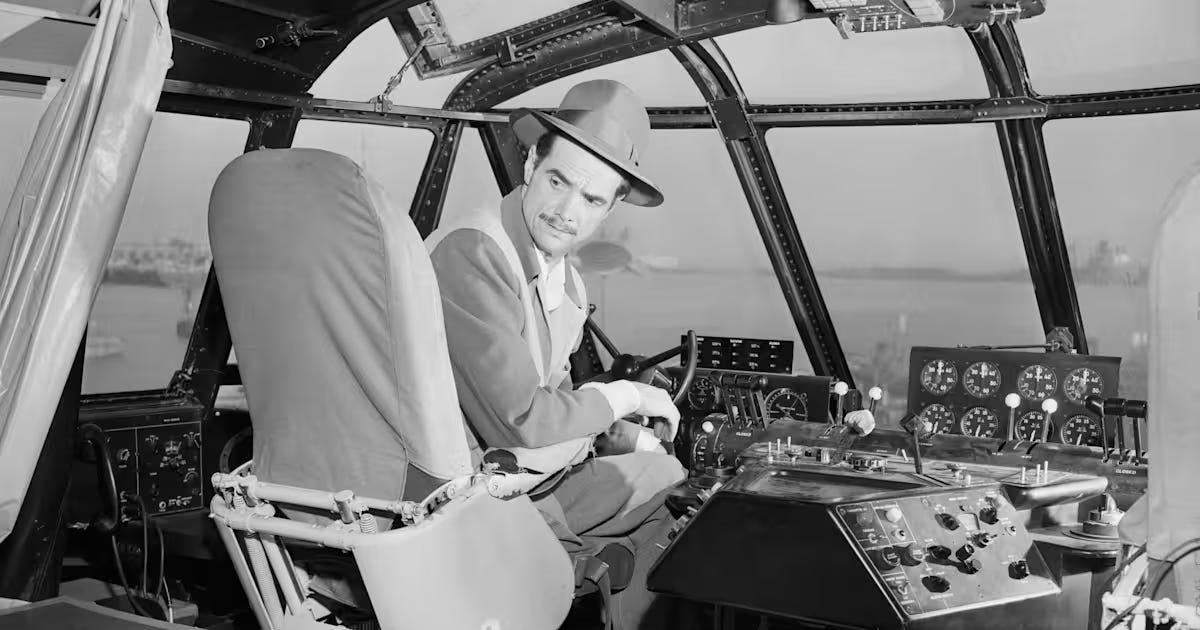
A man sits in darkness in a room at the Desert Inn, Las Vegas. The man owns the hotel. The man cannot leave the room.
The year is 1968
.
ROOM TWO
Sequins catch light. Backstage whispering carries over the roar. “He can go on.” “Can he?” “He has to.”
The crowd is already screaming at a door that won’t open yet.
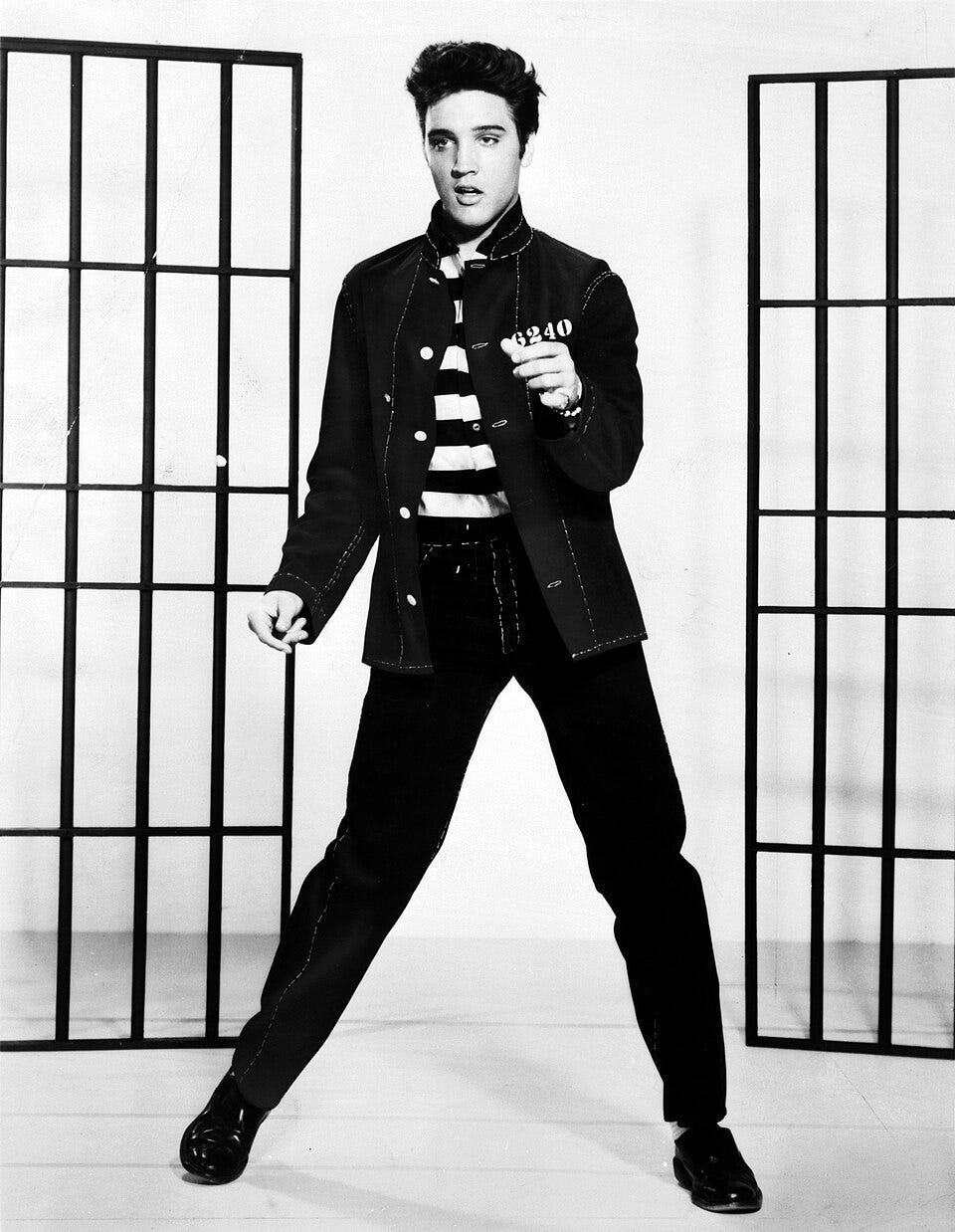
A man stands in a hallway in Memphis. The man is the show. The man is also the product, the investment, the empire, the mythology that 50,000 people came to see.
He can barely stand.
The year is 1977
.
Different decades. Different worlds. Same machine.
Howard Hughes. Elvis Presley.
Not tragedies. Case studies.
This is not a morality play. Hughes and Presley were complicated, gifted, wounded people inside forces bigger than any one decision. What matters here is not blame—it’s the machinery that made stopping nearly impossible.
I. THE MYTH ARRIVES FIRST
We love stories that crown kings. We ignore what happens to the crown-bearer.
Hughes: boy genius, aviation messiah, billionaire monk in the tower. By age 22, he’d produced Hell’s Angels. By 30, he’d broken the transcontinental speed record. By 40, he’d built TWA into an empire, owned half of Las Vegas.
Elvis: chosen one, crowned king by the crowd. By 21, he’d sold 10 million records. By 23, he was the highest-paid performer in entertainment history. By 30, he’d become the referent for an entire generation’s identity.
The press called Hughes “visionary.” The system called him “essential infrastructure.” The press called Elvis “The King.” The system called him “the asset.”
Once a myth becomes profitable, reality becomes negotiable. They stopped being men. They became infrastructure.
II. THE OPTIMIZATION TRAP
When systems discover what pays, everything else becomes overhead.
Hughes optimized for absolute control, secrecy, scale. By 1960, he controlled $2 billion in assets and employed 70,000 people. The optimization worked—until it required a human who could function inside it.
Hughes couldn’t.
Elvis optimized for shows, visibility, cash extraction. By 1970, he generated $100 million annually. The optimization worked—until it required a human who could sustain it.
Elvis couldn’t.
But neither system needed them to function. Both systems needed them to exist—to sign documents, to show up, to remain the legal entity or the product audiences paid to see.
So both systems adapted: assistants who never questioned, doctors who engineered performance, executives who said yes before calculating cost.
Collateral damage: truth evaporated for Hughes. Rest disappeared for Elvis.
If the machine discovers your body is replaceable, it replaces your body. If it discovers your body is essential, it replaces your will.
III. THE BODY INSIDE THE ECOLOGY
Not handlers. Ecology.
Systems don’t need conspiracies. They need incentives that align.
Hughes’s world: doctors whose licenses depended on his prescriptions, executives whose salaries required his approval, lawyers whose careers orbited his decisions. All bound by NDAs, all compensated for silence, all knowing that questioning meant losing access.
Elvis’s world: Colonel Parker whose fortune came from one client, doctors whose practices depended on his tours, musicians whose mortgages required the band to keep playing, family whose homes flowed from the same source.
Almost nobody was trying to harm them. Everyone was protecting their position inside the structure they created.
The ecosystem wasn’t evil. It was efficient—and efficiency at scale starts to feel like cruelty.
Then the body becomes something the system uses.
Hughes stopped eating in public. Then eating regularly. Then leaving rooms. Then touching anything not wrapped in tissue. The body became nuisance. Needs became enemies of productivity.
By 1970: wake (time irrelevant, windows covered), pills, screening room (alone), directives (through intermediaries), different pills, sleep. Repeat.
Elvis stopped sleeping naturally. Then waking naturally. Then eating on any schedule. The body became product. Performance required chemical engineering.
By 1976: pills to sleep, pills to wake, pills to calm, pills to energize, pills to manage pain, pills to sleep again. Repeat.
The systems required decisions and shows. Hughes and Elvis provided them. The fact that both men were disappearing inside the ritual didn’t matter.
His body had tasks. His humanity became overhead.
None of this replaces the inner story—fear, trauma, illness, addiction, loneliness. Systems don’t cause all of that. What they do is remove brakes. Once the machine is built, it rewards denial and punishes truth—until course correction becomes impossible.
IV. BUREAUCRATIC BLINDNESS
When systems punish bearers of bad news, bad news stops arriving.
Hughes, 1966
An aide enters the room. Hughes hasn’t left in four months. The drapes are sealed. Hughes weighs 95 pounds.
“Should we cancel the board meeting?”
Hughes stares. “Why would we cancel?”
“You haven’t been well.”
“I’m fine. The meeting proceeds.”
The meeting proceeds. Hughes doesn’t attend. The quarterly report says: “Mr. Hughes remains actively engaged in all strategic decisions.”
Elvis, 1975
A band member approaches the tour manager. Elvis just collapsed backstage. They revived him. He went on. He forgot lyrics, slurred words, couldn’t finish songs.
“Should we cancel the rest of the tour?”
“Did the audience leave?”
“No, they—”
“Then there’s no problem.”
The tour continues. The press release says: “Elvis Presley continues to delight audiences across America.”
Everyone inside the system is tilting with the floor. Nobody notices the angle.
V. WHEN THE SHOW OUTLIVES THE HUMAN
Meaning persists past function.
Hughes, 1972
He hasn’t left the room in six years. He weighs 90 pounds. His hair is shoulder-length. His nails are several inches long.
The corporations still function. Assistants still arrive for shifts. Lawyers still prepare documents.
Memos still say “per Mr. Hughes’s directive.” Board meetings still reference “Mr. Hughes’s vision.”
The infrastructure runs on the idea of Hughes. The human became optional.
Elvis, 1977
He can barely walk to the stage. The jumpsuit hides 250 pounds on a frame built for 170. The lights hide the sweat, the tremors, the forgetting.
But the show still books. Band members arrive for soundcheck. The Colonel still collects percentages.
Posters still say “The King of Rock and Roll.” Promoters still promise “Elvis - Live in Concert.”
The infrastructure runs on the performance of Elvis. The human was becoming optional.
Like the Titanic’s band playing as the bow went under. Not because anyone believed it would help. Because stopping would require acknowledging that everything had already failed.
Collapse radiates downward.
When Hughes finally died in 1976, the empire fractured. Executives lost positions. Investors lost fortunes. Workers lost jobs.
When Elvis died in 1977, the ecosystem collapsed. Musicians lost their primary income. Staff lost employment. Graceland became a museum.
Who gets hurt when myths collapse?
Never the myth. The myth becomes history, legend, cautionary tale.
The people who built their lives inside the myth’s gravity well—they pay the remainder.
VI. NO VILLAIN REQUIRED
There was no mastermind. No conspiracy. No evil architect orchestrating destruction.
Just structure—and incentives aligned toward the same outcome.
Hughes became a signature on documents. Elvis became a body that could stand under lights.
This is what happens when optimization outpaces care.
VII. THE PATTERN SCALES
The mechanism doesn’t retire. It replicates.
A YouTube creator maintains production schedule through burnout, medication, sleep deprivation. 47 videos per month. 2.1 million subscribers. The algorithm requires consistency. The sponsor contracts are already signed. The production team’s salaries depend on the upload schedule.
A startup founder pitches investors while sleeping three hours per night. Series B requires growth metrics. The burn rate demands results. The employees’ equity depends on the next funding round.
A political campaign schedules 87 events across 14 states in 21 days. The candidate’s voice is failing. The polls show momentum. The donors expect access. The consultants engineer performance through precise pharmaceutical timing.
Same pattern. Different industries. Identical mechanism.
The platforms don’t ask if you’re okay. The platforms ask if you’re available.
And if you’re not available, the platforms move on. They learned to operate on the idea of you.
VIII. THE DESIGN MATTERS
Systems need brakes. They need ways to say “stop” without punishing the people who pull the lever. When stopping becomes impossible, failure becomes inevitable—it just takes longer. The question isn’t why they fell. The question is: Why do we keep building machines that require someone to disappear?
IX. THE ROOMS
ROOM ONE
Howard Hughes dies on April 5, 1976. Being moved from one sealed room to another.
The assistants had been waiting for instructions. The phone lines had been ringing. The pill bottles were still lined up.
The room was already empty.
ROOM TWO
Elvis Presley dies on August 16, 1977.
The tour was already booked. The band was already hired. The venues were already sold out.
The stage had been empty for a long time.
The drapes. The noise. The silence. The crowds. The door that doesn’t open.
The rooms weren’t cages. The systems were.
Neither death was suicide. Both were swallowed by systems that optimized past what a human body could survive.
This essay examines mechanisms, not lives. Hughes and Elvis were complex humans whose stories cannot be reduced to systems analysis. But the pattern of how systems consumed them repeats across contexts, scales, and industries.
We’re still using the same recipe. The economy found a way to eat a person—and call it success.
Nice. Thanks for this. "The economy found a way to eat a person..." The snake eating its tail. Health care is the greatest cost for folks, and the primary employer in most of the States. Health care administration jobs outpace most others. Illness and insurance is a perpetual growth machine.