


OPENING SCENE
Two ledgers on a wooden desk. Colonial administration office. Guatemala, 1780s.
Left column: Tributo
Right column: Same numbers, different header
The administrator crosses out tributo. Writes impuesto above it.
Tribute → Tax.
Same flow of wealth from indigenous communities to Spanish crown. Same enforcement mechanism. Same consequences for non-payment

Page from the Aztec codex Matrícula de Tributos
But something changed.
Under tribute, people felt conquest. Submission. The boot still on their neck 250 years after Alvarado.
Under tax, people felt—what? Civic duty? Participation in governance? The inevitability of supporting “public administration”?
The money moves identically. The imagination shifts completely.
And once imagination shifts, resistance becomes harder to picture.
What are you resisting—conquest, or responsible citizenship?
What actually changed: the system, or the vocabulary used to justify it?
You see this everywhere now.
Tech companies “collect data” (surveillance). Platforms “optimize engagement” (addiction). Employers “rightsize” (mass layoffs). Governments “enhance security” (expand control). Banks offer “financial products” (debt instruments).
Same mechanisms. Softer words.
The pattern is old. The speed is new.
THE MECHANISM
Systems survive by relabeling power.
Not by hiding it. By renaming it until it feels normal, inevitable, even moral.
Harsh words reveal hierarchy:
Tribute. Slavery. Conquest. Extraction. Surveillance.
Soft words naturalize it:
Tax. Employment. Development. Optimization. Data collection.
The mechanism:
When the name changes, the moral frame changes. What felt like domination becomes administration. What looked like theft becomes exchange.
And once the vocabulary shifts, the system becomes harder to see—which makes it harder to question.
Not because people are stupid. Because language shapes what’s imaginable.
You can resist tribute. You resist tax and you’re a criminal avoiding civic responsibility.
Same wealth transfer. Different legitimacy story.
TRIBUTE → TAX
Ancient empire. Soldiers at the village gate.
They’re here for tribute. Everyone knows what this is: subordination made explicit. We conquered you. You pay us. This is the price of not being destroyed.
The relationship is clear. Unequal. Based on force.
Fast forward. Nation-state era. Bureaucracy. Forms. Receipts.
You owe taxes. For roads. Schools. Defense. Public services.
The relationship is... what? Reciprocal? Consensual? You benefit from what you pay for. You’re a citizen participating in collective governance.
Same mechanism: wealth flows from population to state.
But the vocabulary completely transforms the moral frame.
The sleight of hand:
From submission to a ruler
To participation in society
From conquered population paying protection money
To citizens fulfilling civic obligations
Not arguing taxes are bad. Arguing that the language hides the hierarchy even when hierarchy remains.
Try not paying. See how consensual it feels.
The bureaucrat with the form is gentler than the soldier with the sword. But the enforcement mechanism—ultimately—relies on the same foundation: comply or face consequences.
The sword becomes paperwork. The coercive core remains.
RENT → MORTGAGE
Medieval Europe. A peasant.
He works land owned by the lord. Pays rent—portion of harvest, days of labor, whatever the lord demands. The relationship is clear: temporary permission to not starve.
Modern suburb. A family signs a 30-year mortgage.
Monthly payments. Interest. Insurance. Taxes. Maintenance.
They’re “homeowners.” “Building equity.” “Investing in their future.”
Except miss three payments. The bank takes it back.
Always owned it, really. The mortgage is permission to occupy property you’re buying from an institution that will repossess the moment you stop paying.
The vocabulary traveled:
Rent → Lease → Mortgage → “Homeownership”
The pattern: The less likely you are to truly own something, the more the language promises you will—someday.
Calling it “homeownership” feels different than calling it “housing debt.”
Same system. Different imagination.
Historical echo:
Company towns. Sharecropping. Debt peonage.
“You’re not enslaved—you’re employed.”
“You’re not trapped—you’re just in debt.”
“You’re building toward ownership—just keep working.”
The vocabulary creates hope. The math creates trap.
The renaming is the mechanism.
OTHER RENAMINGS
Short runs. Pattern visible.
Spying → Data Collection
You agreed, they say. You clicked “Accept.”
Surveillance becomes “data collection.” Tracking becomes “analytics.” Corporate espionage becomes “business intelligence.” Government monitoring becomes “national security architecture.”
Same function: watching everything you do.
Different vocabulary: sounds like science. Infrastructure. Service.
What the renaming protects: The surveillance itself. Because you consented to “data collection”—how could you object?
Propaganda → Public Relations
Edward Bernays, 1920s.
The word “propaganda” sounds sinister after WWI. Too German. Too manipulative.
The solution: rename it.
Public Relations. Communications. Brand Strategy. Thought Leadership.
Same function: shape public opinion to serve institutional interests. But now it sounds professional. Legitimate.
What the renaming protects: Billion-dollar industries exist solely to make you think what they want you to think—and you’ll defend it as free speech.
Famine → Food Shortage
Colonial administration. Bengal, 1943. Three million dead.
British policies directly responsible—grain export quotas maintained during crop failure, relief efforts inadequate.
The official language: “Regrettable food shortage.”
Not famine. Not starvation. Not policy-induced mass death. Technical term. Logistics problem.
What the renaming protects: Political responsibility. Churchill never had to answer for a “famine.” Just a “shortage” that happened during wartime complexity.
Prison Camps → Detention Centers
Same fences. Same cells. Same separation of families.
“Detention center” sounds temporary. Administrative. Processing facility.
“Prison camp” sounds like what it is: indefinite incarceration without trial.
What the renaming protects: The perception that this is legal. Necessary. Not mass imprisonment.
Torture → Enhanced Interrogation
2000s. US military detention.
The word “torture” carries legal weight. Geneva Conventions. War crimes.
The solution: technical language.
Enhanced Interrogation Techniques. Stress positions. Sleep deprivation. Waterboarding as “simulated drowning.”
Lawyers debate whether it’s “technically torture.” The moral line blurs. The practice continues.
What the renaming protects: The people giving orders. If it’s “enhanced interrogation,” they’re not war criminals—they’re professionals making security decisions.
WHY SYSTEMS DO THIS
The logic is structural:
Words shape loyalty. When you’re a “taxpayer” rather than “tribute payer,” you identify with the system extracting from you.
Words create plausible deniability. “Enhanced interrogation” lets lawyers argue it’s not torture. The vocabulary manufactures gray zones where clear violations can hide.
Words allow violence to become paperwork. Physical force gets replaced by administrative process. The violence moves further from view—but enforcement mechanism remains.
Words move blame from decision-makers to process. “The algorithm decided.” “Policy requires.” “The system shows.” No one’s responsible—it’s just how things work.
The larger pattern:
The system never announces itself as domination.
It arrives as convenience, safety, efficiency, progress—and lets the vocabulary do the rest.
THE COST
What disappears when power renames itself:
Moral clarity. When torture becomes “enhanced interrogation,” debates shift from “should we do this” to “does this technically qualify.” The vocabulary obscures the ethics.
Shared reality. When the same mechanism has five different names depending on who benefits, consensus becomes impossible. We’re not arguing about the thing—we’re arguing about what to call it.
The ability to name what’s happening. Try saying “I’m being surveilled” instead of “my data is being collected.” You sound paranoid. Extreme. The renaming makes accurate description sound like conspiracy theory.
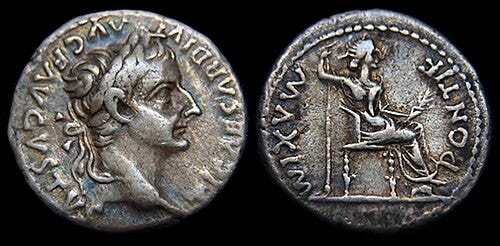
Denarius of the Emperor Tiberius, commonly referred to as "the Tribute Penny".
Historical witnesses:
George Orwell wrote about this in 1946: “Political language is designed to make lies sound truthful and murder respectable, and to give an appearance of solidity to pure wind.”
Confucius taught “rectification of names”—society breaks down when words no longer match reality. When “ruler” doesn’t mean someone who rules justly, everything becomes confused.
Jesus in the Jerusalem Temple found money-changing and animal sales framed as “supporting worship.” Necessary. Respectable. Part of the institution. He didn’t debate accounting procedures. He named it directly: a den of thieves. Stripped the euphemism off the system operating inside sacred space.
Colonized peoples forced to rename land, rivers, gods. The linguistic takeover precedes and enables the physical takeover. Can’t resist what you can’t name in your own language.
Language becomes part of the conquest.
Not metaphorically. Structurally.
Control the vocabulary, control what’s imaginable. Control what’s imaginable, control what’s resistible.
But naming also restores agency.
Labor movements renamed “workplace accidents” as “employer negligence”—and got safety regulations.
Civil rights activists renamed “riots” as “uprisings”—and reframed who was disrupting order.
Indigenous communities reclaim traditional place names—and reassert connection to land the state tried to erase.
Feminists renamed “domestic violence” from “family matter”—and made it prosecutable.
The vocabulary battle runs both directions.
Power renames to obscure. Resistance renames to clarify.
Language camouflages systems—but accurate naming exposes them again.
HOW TO SEE THROUGH IT
Three questions when you encounter institutional language:
1. What did this used to be called?
“User engagement” used to be “addiction.”
“Collateral damage” used to be “dead civilians.”
“Undocumented workers” used to be “illegal aliens” used to be “migrant laborers.”
Track the vocabulary history. See what each renaming hid.
2. Who benefits from the new name?
“Enhanced interrogation” benefits interrogators and their commanders.
“Data collection” benefits surveillance companies.
“Gig economy” benefits platforms extracting labor without employment obligations.
Follow the benefit. That’s who chose the vocabulary.
3. What would it sound like if we named it honestly?
“Tax optimization” → “legal tax avoidance”
“Profit center” → “department that extracts maximum revenue”
“Rightsizing” → “mass layoffs”
“User agreement” → “contract you’ll never read that signs away your rights”
Translate the euphemism. See what it protects.
Quick exercise:
Replace the soft word with the accurate word:
“Consumer data” → behavior surveillance records
“Development project” → displacement of existing residents
“Efficiency gains” → elimination of jobs
“Market correction” → wealth destruction for working people
“Strategic partnership” → extraction arrangement
Not about cynicism. About clarity.
The vocabulary is camouflage. Learning to see through it is skill, not paranoia.
CLOSING SCENE
Return to the ledgers. Same wooden desk.
Two columns:
Left: Tribute
Right: Tax
Same numbers. Same wealth flow.
But now add a third column:
Consent.
Empty. No numbers listed.
Because consent is what the vocabulary implies but the mechanism never requires.
You can rename tribute as tax. You can call coercion contribution. You can frame extraction as participation.
But the ledger still balances the same way.
Money flows up. Power maintains itself. The vocabulary just determines whether you feel conquered or civilized while it happens.
The pattern:
Power is always talking.
The trick is learning which part of the sentence is camouflage.
And once you can see it—you can’t unsee it.
Every “user agreement” becomes visible chains.
Every “optimization” reveals elimination.
Every “development” shows displacement.
The words don’t change the mechanism. They just make it harder to point at.
Until you learn to translate.
Then the ledgers become legible again.
And legible power is vulnerable power.
Because you can’t resist what you can’t name.
But once you can name it—you can.
What’s the euphemism that fooled you the longest?
The institutional language that sounded reasonable until you realized what it actually meant?
Share in the comments. I’m collecting examples for a follow-up piece on how ordinary people are reclaiming honest language.
This is part of an ongoing series on how systems maintain themselves—examining the mechanisms that keep power functioning while appearing to transform.
Subscribe for weekly essays on pattern recognition, linguistic camouflage, and what persists when vocabulary shifts but systems don’t.
captured President Nicolás Maduro vs sovereign leader illegally kidnaped
What fascinates me most about this pattern is that nothing actually changes at first — only the vocabulary shifts. And yet the shift in language is enough to change what feels normal, what feels inevitable, and what feels “reasonable.”
Once you start seeing it, you realize how often power doesn’t solve a problem — it just renames it.
Curious what others are noticing:
What’s one word you once accepted at face value that now feels like camouflage?